
Thermal Labels
Thermal labels come in two main types for your thermal label printer:
So what is the difference?
Direct thermal labels are made from a specialised label material that incorporates the ink in the paper. The transparent ink is ‘cured’ with heat and acid. You will know what they are when you think of a till receipt. The material used in thermal till receipt machines is ‘direct thermal’ material.


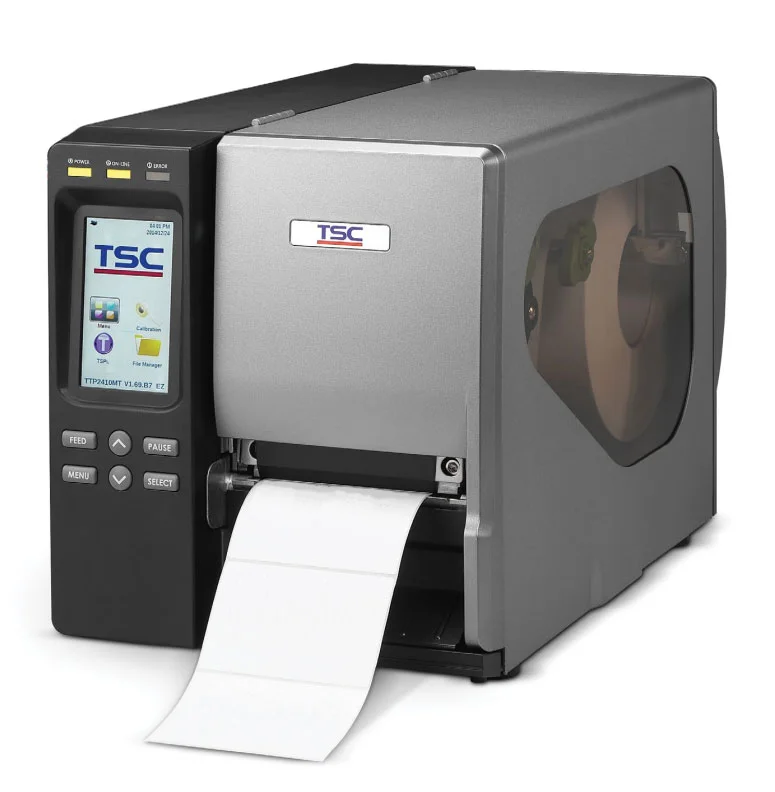
Thermal Labels
- Direct thermal labels and
- Thermal transfer labels
Direct Thermal Labels
Direct thermal labels have a pigment layer that cures when heated. To print on direct thermal labels you just need a direct thermal printer. The benefit of this is how easy they are to work with as there is only one feedstock – the labels themselves. Direct thermal labels come in varying standards from economy, semi-top coated to full top-coated materials.
Thermal Transfer Labels
Thermal transfer labels have no ink in them. To print on them you need to use an inking system. The thermal inking system used on thermal transfer labels is usually a thermal ribbon. Ribbons come in different types depending on base material and other factors considered when selecting a thermal transfer label.
Lets deep dive into each thermal label type.
Direct Thermal Labels
How do they actually work? The exact mechanism by which a direct thermal label works is pretty simple – as can be seen from this printing method being used in fax machines (yeah, that’s old skool!), till receipts and other applications requiring quick and clean, simple print on demand.
Direct thermal labels – the science!
The base material is coated with an benign layer of pigment and a crystal acid matrix. In turn, this has a protective coating to prevent damage to the matrix layer.
The acid crystals have a low melting temperature but when the crystals liquefy, they activate the curing process in the pigment by reacting with the pigment precursor. This change of state leaves a black mark where the acid liquefied and the ink precursor chemical reacted with it. What you see is marking on the material – embeded into the acid/pigment matrix which then resolidifies rapidly after heating.
The print head on the thermal printer has hundreds of tiny ceramic heaters (pixels) in a row across the print head. These can rapidly heat and cool from ambient temperature to around 70oC when the labelling software and electonics tell them to.

Coupled with the material being passed under the print head at a constant rate and the pixels heating and cooling on instruction from the labelling software, allows the printer to print legible text, lines, shapes and rudimentary images.
Direct thermal labels materials
Direct thermal label material comes in both paper and plastic types. Paper based direct thermal materials are cheap whereas plastic direct thermal materials are more expensive. The overwhelmingly common material is direct thermal paper. This in turn comes in three main types – Direct Thermal Eco and Direct Thermal Semi-Top Coated. Additionally you can get Direct Thermal Top Coat.
- Direct thermal eco materials are the cheapest – an economy solution. “DT Eco” has no protective barrier over the maxtrix which reduces cost but also leaves the matrix exposed. This in turn can slightly shorten the lifespan of a thermal print head.
- Direct thermal semi-top – or DT Semi Top, has a thin coating over the matrix which in turn adds to cost but also extends the lifespan of the print head.
- Direct thermal top coat – this has a thicker layer of protective varnish over the acid/pigment matrix. In turn, the cost is higher but the protection to the print head is better thus increasing useable lifespan.
Non-paper direct thermal options
There are a few non-paper options, the most common of which is polypropylene.
Unlike paper based materials, polypropylene is water resistant and ideal for wet conditions (not at print time though!).
Examples where polypropylene direct thermal labels are useful is where the label will be subject to a wet environment such as outside, or where the label will be subject to moisture and regular or substantive temperature changes where condensation is likely.
Whereas a paper label will absorb moisture and deteriorate in condition, a plastic label will shrug water off and retain colour and integrity.
Direct thermal labelling is suitable for applications with a shorter shelf-life. For example, sandwich labels or delivery labels only require short term endurance, whereas a garden centre plant label will require far more longevity and durability.
If you have specialist needs, call us on 01332 864895 to discuss your specific needs, so we can give you the advice you need before buying your labels.
Thermal Transfer Labels
Thermal transfer labels have no ink in or on the material. The material prices are lower as a result, but to print on them, you need an inking ribbon.
Paper thermal transfer labels can be vellum (basic untreated paper), or semi-gloss or gloss. The concepts are analogous to the direct thermal labels inasmuch as the vellum is “eco”, the semi-gloss has a thin protective varnish and the full gloss coating is a thicker coating. These levels of varnishig do offer some water-resistance – but not much and testing may be suitable before diving into an order.
Plastic thermal transfer ribbons can be any of the 4 main plastics used in labelling (although there are many speicialist materials to choose from). The four main materials are:
- Polypropylene (PP)
- Polyethylene (PE)
- Polyester (PET)
As with any non-pigmented (direct thermal) material, these will require thermal inking ribbons.
Thermal transfer label ribbons

The choice of thermal transfer ribbon ranges from supplier to supplier. They generally come in three main categories with differing “qualities” in each category. There are several major manufacturers for ribbons and this is a specialised product.
- Wax ribbons – this is the most basic standard of ribbon and is suitable for paper materials. Wax ribbons are generally cheaper than the alternatives. They are generally not recommended for plastic materials.
- Wax/Resin mixed ribbons – these are suitable for delivering better print quality from your thermal printer on a wider range of substrates. They can be used on papers and and plastics to some extent but it is always best to test or tiral if in doubt.
- Resin ribbons – these deliver the best results on plastic materials with better adhesion and depth of opacity. Conversely, they do not work well on paper materials.
Depending on you label purchase, we will happily use our experience and advise you on the best ribbon type to use on the material you have chosen. Just call us on 01332 864895 to discuss your specific needs
Thermal Label Adhesives
The thermal label adhesive you choos depends on your ultimate needs and the environment the label is intended to ‘work’ in. Ther are 6 different grades of adhesive:
- Removable or Peelable – a low tack adhesive that allows for easy removal of a label after application
- Permanent – a higher tack adhesive for when a label is intended to stay on the item permanently
- Freezer – an even higher tack adhesive suitable for labels being applied at room temperature but then going into a cold or wet environment
- Deep Freeze – similar to freer adhesive but with a higher initial ‘grab’. This means cold items can be labelled when cold
- Wetpack – this adhesive is far more aggressive with high grab that can work on wet surfaces (witihin reason)
- Tyre adhesive – an ‘old skool’ solvent/rubber adhesive with incredibly high tack and adhesion – not suitable for food
All types material and adhesive types are available as coloured thermal labels in any pantone colour you want.
Give us a call on 01332 864895 and our team of advisors can help you find the right solution for your thermal labelling needs.

We’ve had a great experience working with this supplier, especially with Natalie - she is always very responsive, professional, and friendly. The pricing is highly competitive and the sales service has been excellent from start to finish.If I could offer one suggestion, it would be to improve the account and invoice management process. It would be really helpful if there were a system for clients to easily track their past orders and invoices in one place.Overall, very pleased with the service and look forward to continuing our collaboration.

Absolutely brilliant service from start to finish. The team are brilliant and the product was excellent quality and exactly what I wanted. Natalie is amazing as are her colleagues. Will definitely be a returning customer. Thank you

Ive used Positive ID Labelling Ltd for all our egg box labels for many years now. Natalie is always above and beyond helpful and the service is exceptionally fast and efficient.

I inadvertently ordered the incorrect label guns which was quickly sorted by Natalie. She was excellent, customer service at its best! Thank you once again
